

Give Us a Call:+91 9890070077Email:imscdr.ac@gmail.com
IMS-CDR was estd. in 1990 & has reputation for need based and novel educational Programmes, community-oriented activities, and innovative practices. The primary aim of an institutional library is to aid and support the academic programmes offered and administer all facets of the Learning Resources. Thus IMS-CDR Library imparts leading knowledge to develop appropriate attitude, skills and competencies to meet corporate and organizational requirements to develop the overall personality of students so as to make them responsible citizens. It conducts student-centric and library-oriented activities and online dissemination of information not only empowers its enduring institution but also helps it to continue to grow from strength to strength! It is a celebration of Librarianship and also showcases the library staff’s selfless and diligent contributions and invaluable service.
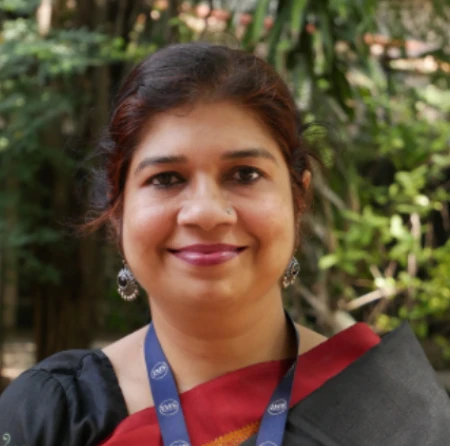
The academic scenario, over the years, has undergone a tremendous change and therefore continuous education is the need of the hour. The Library reflects the diversity and character, and the needs and expectations of our users. Those needs and expectations are often extensive, and the services are invaluable. The purpose of the institutional library is to familiarize the users i.e. students, staff and stakeholders with the reading culture, search strategy, building informal education by conducting information literacy programmes, professional deliberations and usage of tools and technologies in accessing E-resources like E-Books, E-Journals, E-Library, Online Databases, and Streaming Videos with current tools and technologies in better and effective utilization of resources and gearing up for skill based knowledge and leadership qualities. Today’s libraries are all about Transition, Exploration, Planning, Survival, Optimism and Opportunities and Librarians are Linking Ideas Between Readers And Resources .i.e. Informing, Enriching, Sharing!








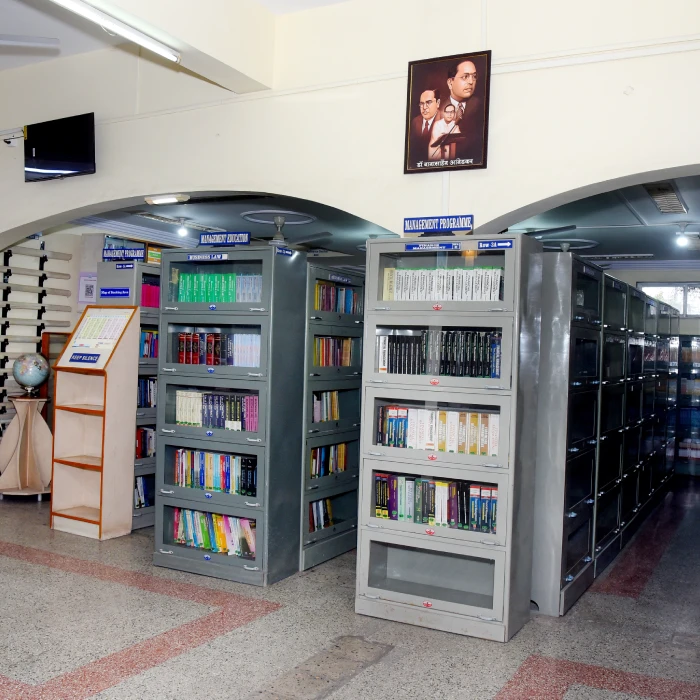
The institute has been reaccredited in the year 2018 by NAAC and Learning Resource Centre (Library) has played a pivotal role. It is the recipient of the Best B- School Library Award from Discovery Education Media-MBA. The staff are professionally qualified and recipients of the Best Non-Teaching Award from Savitribai Phule Pune University, Pune and Outstanding Management Librarian Award from International Association of Management Scholars (AIMS). Professionally qualified staff with Master’s and PhD degrees in Library and Information Science. The IMS-CDR library has been automated since 2000. It is spread over the area 457.96 Sq.mt. comprising of Circulation Counter and Stacking area, Newspaper section, Extracurricular section, General Knowledge section, Research and Referencesection, Librarians cabin, Photocopying section, Journal and Periodical section, Book Bank section, CD Library, Luggage Counter and the two spacious Reading Halls along with ramp and section for Differently abled students.
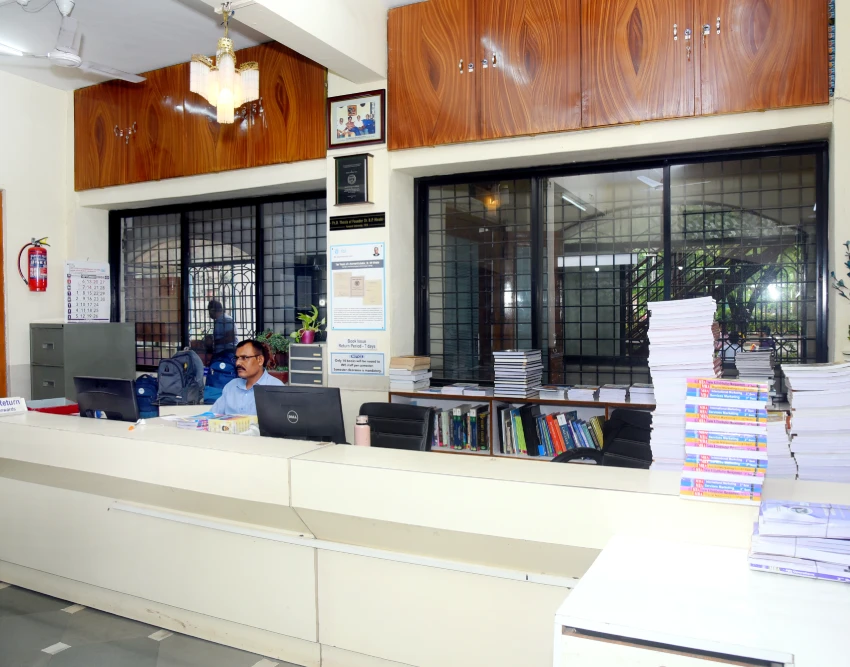
The circulation counter and Journal section is cordoned off to avoid direct contact of staff with users. It is well-lit, clean with adequate and appropriate seating arrangement. The Library has a good collection of Management Computer books (printed and eBooks in PDF Format), Journals of Academic nature and news magazine, CDs and multimedia, Research and reference tools, e-resource and Institutional repositories, Project reports and PhD theses, Newspapers and employment related literature, Maps, Bound Volumes and Corporate membership, special collection of Competitive examination books, Talking books, NPTEL Video streaming video library, rare collection etc.
Library best practices are continuous and need-based services. The practices are implemented with available resources and help in creating openness of the library to change. They are further divided into Management and Administration, Collection and Services, Extent of use of service and Use of technology. The services can be broadly categorized as Current Awareness Service; Selective Dissemination of Information; Information Literacy Program and ICT and Bibliographic Services. The digital initiatives include Automated circulation upgraded to Barcode technology, CD / DVD Carousel for CD Library, digitization of Ph. D. Theses, e-visitor count with Door Metal Detector, free Mobile charging points and Book Bank Scheme, Photocopying and Scanning services, Projects in PDF format, remote access of E-books/e-journals from DELNET, NLIST consortium, security with CCTV surveillance and WiFi enabled premises.
The Library reinforces healthy practices and elevates awareness of its physical spaces. During the Covid-19 pandemic, the Library launched the e–Library on the open source platform Calibre with books in PDF format pertaining to the syllabus for MBA & MCA Programmes, Economics, Law, Social Studies, Humanities and inspirational books. The students and staff are online bulk subscribed for weekly e-Newsletter Inspire Pro and daily Free Press Journal e-newspaper service (English & Marathi Language) through IMS Telegram Channel. The facilities of free study material are made available for MBA, MCA students and Book Bank for B.Voc students.

Students who have taken admission for Management Programmes at IMS can become a regular member of the Library for that academic year.
No, book lending facility is not allowed for non-IMS Students.
Yes, under the Extension Service, the researchers can avail the facility for three months /year against nominal deposits and library charges. Recommendation from concerned authorities is a must.
Photocopy facility is available in the library itself. Photocopy charges are applicable for limited pages. Entire book cannot be photocopied. Journal / Periodical articles can be photocopied. Ph.D. Thesis and Dissertations cannot be photocopied.
Three Library cards are issued from the circulation counter for a week’s period. Books, Journals/Periodicals, projects, CDs etc. are available for issue-return. Study Material and Book bank facility (FREE) can be availed by students.
User needs to replace the books or/and pay the current price with postage charges as FINE.
The late fee is 5/- per day which is subjected to change. Genuine problems like medical mishaps will be entertained against proof signed by HODs of the concerned programme.
The two spacious reading hall timings are extended till late evening with prior permission from the Director and case followed by the Librarian.
Library users should get enrolled in the IMS Telegram Channel to receive the e-Daily feeds, notifications and updates from the Library.
They can donate resources; share their experiences to the current batch and strengthen the Institute – Industry bond.
Yes , library clearance is absolutely necessary as examination hall tickets will not be issued from the Administrative / Office window.
The student-centric programmes are Author Speaks ( Book talk show), Book / Photo exhibition, Lecture series, Orientation and library tour, best practices like Essay writing competition and Best user Award, important days celebration, festivities and functions related to human values and national integrity
Yes, books can be donated to the library. They are scrutinized by concerned faculty and selected ones are enrolled in the library. A thank you cum appreciation letter is dispatched to the donor.
Yes, Students can become a member of the “Student Library Committee “or can voluntarily avail their services. Library lent’s platform to users to hone their leadership skills and practice management principles.
Students can put their remarks and suggestions into the suggestion box which is opened on every working Monday and problem areas are subjected to immediate action. Students can fill in the library questionnaire to elaborate their requirements which are subjected to further analysis and action.
No, the library is conducting annual stock taking so the library is closed for operational purposes. The BOOK CLUB is available during vacation periods.
Library is functional from 10.00 am- 5:00 pm for operational purposes on weekdays and till 2.00pm on Saturday. Reading hall timings are modified according to the schedule of University examinations.
Yes, the user can place an order through HODs /Librarian/entry into the requisition register placed at the circulation counter without any faculty recommendation.
Students can enrol in the Student Library Committee and assist in various library programs and activities.
Library users can directly talk to the Librarian or write an email to swatibarnabas1@yahoo.com